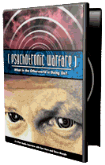
Dear Pastor and Christian Leader, time is running out for you to influence the debate on transhumanism.
THE ISSUE
In recent years, astonishing technological developments have pushed the frontiers of humanity toward far-reaching morphological transformation that promises in the very near future to redefine what it means to be human. An international, intellectual, and fast-growing cultural movement known as transhumanism, whose vision is supported by a growing list of U.S. military advisors, bioethicists, law professors, and academics, intends the use of biotechnology, genetic engineering, nanotechnology, cybernetics, and artificial intelligence as tools that will radically redesign our minds, our memories, our physiology, our offspring, and even perhaps— as Joel Garreau, in his bestselling book Radical Evolution, claims—our very souls. The technological, cultural, and metaphysical shift now underway unapologetically forecasts a future dominated by this new species of unrecognizably superior humans, and applications under study now to make this dream a reality are being funded by thousands of government and private research facilities around the world. The issues raised by human-transforming science must be addressed by Christian leaders in a serious national conversation. To fail this responsibility will be to abdicate the question "what does it mean to be human" to developing transhuman definition.
CLICK HERE TO READ THIS VERY IMPORTANT OPEN LETTER TO CHRISTIAN LEADERS
http://www.raidersnewsnetwork.com/leadstory94.htm
Friday, September 10, 2010
Tuesday, September 7, 2010
PART 11 - Forbidden Gates: How Genetics, Robotics, Artificial Intelligence, Synthetic Biology, Nanotechnology, & Human Enhancement Herald the Dawn of Techno-Dimensional Spiritual Warfare
Editor's note: All notations will be cited in the final report. The information is based on research contained in Tom and Nita Horn's upcoming new book:
THE COMING BATTLE... WILL BE MORE THAN ARTILECTS vs. COSMISTS
The ability to tinker with our genes offers the astounding promise—and peril—of immortality, which mythically has been the defining difference between gods and mortals. It also offers the possibility of an even greater variety of breeds of humans than there is of dogs. —Joel Garreau, Radical Evolution
The prospect of building godlike creatures fills me with a sense of religious awe that goes to the very depth of my soul and motivates me powerfully to continue, despite the possible horrible negative consequences. —Prof. Hugo de Garis, artificial brain designer
In recent years, astonishing technological developments have pushed the frontiers of humanity toward far-reaching morphological transformation that promises in the very near future to redefine what it means to be human. An international, intellectual, and fast-growing cultural movement known as transhumanism, whose vision is supported by a growing list of U.S. military advisors, bioethicists, law professors, and academics, intends the use of genetics, robotics, artificial intelligence and nanotechnology (Grin technologies) as tools that will radically redesign our minds, our memories, our physiology, our offspring, and even perhaps— as Joel Garreau, in his bestselling book Radical Evolution, claims—our very souls.
Unfortunately for mankind, the technological and cultural shift now underway not only unapologetically forecasts a future dominated by a new species of unrecognizably superior humans, but an unfathomable war—both physical and spiritual—that the world is not prepared for. It will be fought on land, within the air and sea, and in dimensions as yet incomprehensible. Even now, the synthetic forces that will plot man’s wholesale annihilation are quietly under design in leading laboratories, public and private, funded by the most advanced nations on earth, including the official governments of the United States, France, Britain, Australia, and China, to name a few. As a result of progressive deduction, reasoning, and problem solving in fields of neurotechnology and cybernetics, strong artificial intelligence or “artilects” will emerge from this research, godlike, massively intelligent machines that are “trillions of trillions of times smarter than humans” and whose rise will prove profoundly disruptive to human culture, leading to a stark division between philosophical, ideological, and political groups who either support the newly evolved life forms as the next step in human and technological evolution or who view this vastly superior intellect as an incalculable risk and deadly threat to the future of humanity. These diametrically opposed worldviews will ultimately result in a preemptive new world war—what is already being described as gigadeath, the bloodiest battle in history with billions of deaths before the end of the twenty-first century.
For those who find the fantastic elements in the statements above implicative of science fiction or even future Armageddon as forecast in the ancient apocalyptic and prophetic books of the Bible, the catastrophic vision is actually derived from near-future scenarios, which leading scientists like Prof. Hugo de Garis, director of the Artificial Brain Lab at Xiamen University in China, outlines in his book, The Artilect War: Cosmists vs. Terrans: A Bitter Controversy Concerning Whether Humanity Should Build Godlike Massively Intelligent Machines, as unfolding due to exponential growth and development this century in grin technologies.
“I believe that the twenty-first century will be dominated by the question as to whether humanity should or should not build artilects, i.e., machines of godlike intelligence,” de Garis says. “I see humanity splitting into two major political groups, which in time will become increasingly bitterly opposed, as the artilect issue becomes more real.”
Professor de Garis continues:
The human group in favor of building artilects, I label the “Cosmists” [to whom] building artilects will be like a religion... something truly magnificent and worthy of worship...
The second human group, opposed to the building of artilects, I label the “Terrans”... who will argue that allowing the Cosmists to build [artilects] implies accepting the risk, that one day, the artilects might decide... that the human species is a pest. Since the artilects would be so vastly superior to human beings in intelligence, it would be easy for [them] to exterminate the human species....
Thus to the Terrans, the Cosmists are... far worse than the regimes of Hitler, Stalin, Mao... or any other regime that murdered tens of millions of people in the twentieth century, because [this] time... we are talking about the potential annihilation of the whole human species, billions of people.[i]
Professor de Garis continues in his book to describe how the work to build artilects is proceeding nonetheless with anticipation of its realization potentially close at hand. As a result, he falls asleep at night thinking about the godlike synthetic intelligence he and others are constructing. Sometimes his mind becomes enraptured of his creations with a sense of intellectual and spiritual awe. Then, waking up a few hours later in a cold sweat, he is jolted from bed by a horrific dream in which vivid scenes depict the slaughter of his descendents at the hands of the artificial deities.
Dr. de Garis is not alone in this fear, that what he and other research scientists are feverishly working toward could soon become a nightmarish predicament mankind will not survive. Because it is difficult, if not impossible, to accurately predict how strong artificial intelligence will actually affect the world, it is unclear whether humans will be viewed by the unnatural life forms as serving a purpose in a world dominated by super-intelligent machines or whether they will be weighed as lacking any practical function and therefore be considered expendable. It could be that we won’t even see the question coming. In other words, we may already be in the process of being lulled into subservience toward the rise of the machines. As the brilliantly insane Theodore Kaczynski, in his thirty-five-thousand-word paper, “Industrial Society and Its Future” (also called the “Unabomber Manifesto”), wrote:
As society and the problems that face it become more and more complex and machines become more and more intelligent, people will let machines make more of their decisions for them, simply because machine-made decisions will bring better result than man-made ones. Eventually a stage may be reached at which the decisions necessary to keep the system running will be so complex that human beings will be incapable of making them intelligently. At that stage, the machines will be in effective control. People won’t be able to just turn the machines off, because they will be so dependent on them that turning them off would amount to suicide.[ii]
Crazy or not, Kaczynski may be right in that man’s demise at the hands of machines will happen gradually, during which time we humans will become the proverbial frogs in the kettle set to boil. On the other hand, we are more likely to be reduced any day now in the blink of an enhanced eye to the status of domestic animals in the minds of artificial intelligence, as Technological Singularity—that magical future moment that many futurists and tech experts believe could happen soon—gives birth overnight to some version of the artilects, who suddenly come online as conscious, living super-minds, immensely more powerful than human beings.
“As a metaphor for mind-boggling social change, the Singularity has been borrowed from math and physics,” writes Joel Garreau in Radical Evolution. “In those realms, singularities are the point where everything stops making sense. In math it is a point where you are dividing through by zero [and in physics it is] black holes—points in space so dense that even light cannot escape their horrible gravity. If you were to approach one in a spaceship, you would find that even the laws of physics no longer seemed to function. That’s what a Singularity is like.”[iii] Ray Kurzweil, who is credited with groundbreaking work in artificial intelligence and is, among other things, the co-founder of an interdisciplinary graduate studies program backed by Nasa known as the Singularity University, appreciates the comparison between the coming Technological Singularity and the physics of black holes:
Just as a black hole in space dramatically alters the patterns of matter and energy accelerating toward its event horizon, the impending Singularity in our future is [a] period during which the pace of technological change will be so rapid, its impact so deep, that human life will be irreversibly transformed.... The key idea underlying the impending Singularity is that the rate of change of our human-created technology is accelerating and its powers are expanding at an exponential pace. Exponential growth is deceptive. It starts out almost imperceptibly and then explodes with unexpected fury.[iv]
In plain language, Abou Farman says Kurzweil’s work on the Singularity:
...analyzes the curve of technological development from humble flint-knapping to the zippy microchip. The curve he draws rises exponentially, and we are sitting right on the elbow, which means very suddenly this trend toward smaller and smarter technologies will yield greater-than-human machine intelligence. That sort of superintelligence will proliferate not by self-replication, but by building other agents with even greater intelligence than itself, which will in turn build more superior agents. The result will be an “intelligence explosion” so fast and so vast that the laws and certainties with which we are familiar will no longer apply. That event-horizon is called the Singularity.[v]
Kurzweil elaborates on what the Singularity will mean to human biology:
Our version 1.0 biological bodies are... frail and subject to a myriad of failure modes.... The Singularity will allow us to transcend these limitations.... We will gain power over our fates. Our mortality will be in our own hands [and] the nonbiological portion of our intelligence will be trillions of trillions of times more powerful than unaided human intelligence.
We are now in the early stages of this transition. The acceleration of paradigm shift... as well as the exponential growth of the capacity of information technology are both beginning to reach the “knee of the curve,” which is the stage at which an exponential trend becomes noticeable. Shortly after this stage, the trend becomes explosive. [Soon] the growth rates of our technology—which will be indistinguishable from ourselves—will be so steep as to appear essentially vertical.... That, at least, will be the perspective of unenhanced biological humanity.
The Singularity will represent the culmination of the merger of our biological thinking and existence with our technology, resulting in a world that... transcends our biological roots. There will be no distinction, post-Singularity, between human and machine.[vi]
In the next entry readers will learn how critical thinking about the timing of the Singularity concerning the emergence of strong artificial intelligence and its impact on human biology is poised to take a major step forward, sooner than most comprehend.
Sign up to be notified when the book on which this series is based is released and receive OVER $60.00 IN FREE GIFTS! Sign up here!
WATCH THE TRAILER! WARNING: NOT FOR THE WEAK!
Saturday, September 4, 2010
PART 10 -- Forbidden Gates: How Genetics, Robotics, Artificial Intelligence, Synthetic Biology, Nanotechnology, & Human Enhancement Herald the Dawn of Techno-Dimensional Spiritual
Editor's note: All notations will be cited in the final report. The information is based on research contained in Tom and Nita Horn's upcoming new book:
AUTHOR'S NOTE: Following this entry, the basics of Spiritual Warfare 101 will have been covered and this investigative series will turn its focus upon GRIN technologies (genetics, robotics, artificial intelligence, and nanotechnology) to uncover how human enhancement and a near future transhuman vision by departments of the US government and other global agencies will change everything we have ever known about supernatural conflict.
TEMPTATION, INFLUENCE, OBSESSION, DEMONIZATION, POSSESSION
Wherever God erects a house of prayer, The Devil always builds a chapel there; And ’t will be found, upon examination, The latter has the largest congregation. —Daniel Defoe
Given the content of the previous chapter and the inevitability during the study of spiritual warfare that the thorny (if not polarizing) question will arise concerning whether true Christians can become demon possessed, we need to point out at this juncture that although daimonizomai (“to be demonized”) and echon daimonion (“having a demon”) are manifested within institutionalized Christianity, most scholars believe that those who are truly born again can never actually be possessed—as in inhabited—by demons. These say there are no instances of “possession” of believers in the Bible, not a single verse in the Scripture even warning of the possibility, and zero examples of Jesus Christ or the early church casting demons out of Christians.
What these scholars do point to in Scripture regarding the inner space of believers is that our body “is the temple of the Holy Ghost, which is in you, which ye have of God, and ye are not your own” (1 Corinthians 6:19). John writes that “he that is begotten of God, keepeth himself, and that wicked one toucheth him not” (1 John 5:18). Therefore, “What communion hath light with darkness? And what concord hath Christ with Belial.... And what agreement hath the temple of God with idols? for ye are the temple of the living God; as God hath said, ‘I will dwell in them; and I will be their God, and they shall be my people’” (2 Corinthians 6:14b–16). These and similar Scriptures verify for those who have the Holy Spirit residing within them, such scholars say, that they are positively redeemed and sealed from the torment of diabolical possession. As John also certified, “If the Son therefore shall make you free, ye shall be free indeed” (John 8:36).
Though in recent years, burgeoning “Christian deliverance ministries” have suggested otherwise, claiming that daimonizomai and echon daimonion infer the Lord’s body can actually be inhabited by demons, it is usually a matter of semantics. Confusion over the meaning of the terms “possession” and “demonization” is somewhat understandable from an exegetical standpoint, especially given how daimonizomai is used in Scripture to refer to a variety of problems and demonic manifestations. But because it is dangerous to promote precise definitions where none exist in Scripture, it should be noted that the actual phrase “demon possession” does not even appear in the Bible (Josephus coined this phrase near the end of the first century), and what some teachers classify as “possession” is actually demonization—a spirit from an external posture gains control or influence over a person. As such, literal possession is different than demonization, and ample evidence exists in the New Testament to support this notion that whereas believers may never be “possessed,” they most certainly can be tempted, influenced, oppressed, and even demonized by evil supernaturalism. To this end, the apostle Paul warned the Christians at Ephesus (Ephesians 4:25–31) not to give “place” (Greek: topos) to the devil, meaning a foothold, opportunity, power, occasion for acting, or doorway into one’s personal space through which demonic strongholds can be established. Paul even listed particular behaviors that could lead to this fiendish union—lying, anger, wrath, stealing, bitterness, clamor, evil speaking (Greek blasphÄ“mia: “to blaspheme, gossip, slander others”), and malice. Elsewhere in the Bible, we learn that doorways for agents of Satan to enter a believer’s life can also include encumbrances like fear, such as the fear that led Peter to deny Christ in Luke chapter 22 and that Jesus made clear was an effort by Satan to cause Peter to stumble (v. 31), and greed—as illustrated in the story of Ananias and Sapphira in Acts chapter 5, where “Satan” (v. 3) filled the couple’s hearts to lie and to hold back a portion of money. Demonization of a Christian through these and similar weaknesses is usually gradual, where small decisions are made over an extended period of time during which the individual gives in to temptation, followed by ongoing and progressive surrender of territory within the mind and finally the flesh. Such steps to demonization may be summarized accordingly:
Temptation: The enemy discovers a weakness and appeals to it.
Influence: The individual entertains the idea and finally gives in to temptation. A foothold is established in the person’s life, making it harder to resist the same or related activity in the future.
Obsession: The activity eventually becomes an unhealthy preoccupation and irresistible impulse leading to critical degrees of control over the individual. The power to resist is practically gone.
Demonization: Control over the individual by external power becomes substantial. What at one time was considered sinful and to be avoided is now an addiction. The person may no longer even recognize the tendency as immoral, and little or no fortitude to cease participating in the activity remains.
Possession: This can occur if the individual turns his or her back on God so as to fully embrace carnality, surrendering the body and mind to Satan’s control. The desire to resist invasion by discarnate supernaturalism is vacated.
What immediately stands out in these steps and doorways to demonization is how central the mind of man is to the functioning battleground where spiritual warfare takes place. Whether it is lying, anger, wrath, stealing, bitterness, clamor, evil speaking, malice, fear, greed, or another human frailty, the battle begins in our thought life where we are tempted to give in to sin. “That’s where Satan can manipulate people toward his ends discreetly and invisibly,” writes Chip Ingram in The Invisible War. “If he can distort our thoughts, our emotions, and our knowledge, then our behaviors and relationships will fall the way he wants them to. And even if he doesn’t manage to turn us to overt evil, a little bit of distorted thinking can neutralize us and render us practically ineffective.” [1] In other words, if Satan cannot possess or demonize an individual, he will settle for what he can get, influencing the mind and spirit to whatever extent he can, keeping people ineffective or causing them to become a problem for their families, their communities, or their churches.
The emphasis on the human mind as the primary battleground upon which the forces of good and evil struggle to dominate the will of men not only fills the pages of Scripture but was recognized by many ancient cultures, including the Greeks, who were so intrigued by the concept that they literally built a large part of the fables of their thirteenth god, Dionysus, around it. Often depicted by modern writers as the inventor of wine, abandon, and revelry, these descriptions are inadequate in that they refer only to the basic elements of intoxication and enthusiasm that were used as tools by the Bacchae (the female participants of the Dionystic mysteries, also known as Maenads and Bacchantes) in their rituals to experience the intoxicating god of unbridled human desire. Followers of Dionysus believed that he was actually the presence that is otherwise defined as the craving within man that longs to “let itself go” and to “give itself over” to base earthly desires. What a Christian might resist as the lustful wants of the carnal man, the followers of Dionysus embraced as the incarnate power that would, in the next life, liberate the souls of men from the constraints of the present world and from the customs that sought to define respectability through a person’s obedience to moral law. Until that “liberating” day arrived, the worshippers of Dionysus attempted to bring themselves into union with the god through a ritual casting off of the bonds of sexual denial and primal constraint by seeking to attain the higher state of ecstasy. The uninhibited rituals of ecstasy (Greek for “outside the body”) were thought to bring followers of Dionysus into a supernatural condition that enabled them to escape the temporary limitations of the body and mind and to achieve a state of enthousiasmos, or “outside the body and inside the god.” In this sense, Dionysus represented a dichotomy within the Greek religion, as the primary maxim of the Greek culture was one of moderation, or “nothing too extreme.” But Dionysus embodied the absolute extreme in that he sought to inflame the forbidden passions of human desire within the mind.
Interestingly, as most students of psychology will understand, this gave Dionysus a stronger allure among the Greeks who otherwise tried in so many ways to suppress and control the wild and secret lusts of the human heart. But Dionysus resisted every such effort and, according to myth, visited a terrible madness upon those who would deny him free expression. The Dionystic idea of mental disease resulting from the suppression of secret inner desires, especially aberrant sexual desires, was later reflected in the teachings of Sigmund Freud. Freudianism might therefore be thought of as the grandchild of the cult of Dionysus. Conversely, the person who gave himself over to the will of Dionysus was rewarded with unlimited psychological and physical delights. Such mythical systems of mental punishments and physical rewards based on resistance and/or submission to Dionysus were both symbolically and literally illustrated in the cult rituals of the Bacchae, as the Bacchae women (married and unmarried Greek women had the “right” to participate in the mysteries of Dionysus) migrated in frenzied hillside groups, dressed transvestite in fawn skins and accompanied by screaming, music, dancing, and licentious behavior.
When, for instance, a baby animal was too young and lacking in instinct to sense the danger and run away from the revelers, it was picked up and suckled by nursing mothers who participated in the hillside rituals. But when older animals sought to escape the marauding Bacchae, they were considered “resistant” to the will of Dionysus and were torn apart and eaten alive as a part of the fevered ritual. Human participants were sometimes subjected to the same orgiastic cruelty, as the rule of the cult was “anything goes,” including bestiality. Later versions of the ritual (bacchanalia) expanded to include pedophilia and male revelers, and perversions of sexual behavior were often worse between men than they were between men and women. Any creature that dared to resist such perversion of Dionysus could be subjected to sparagmos (“torn apart’) and omophagia (“consumed raw”).
In 410 bc, Euripides wrote of the bloody rituals of the Bacchae in his famous play, The Bacchantes:
The Bacchantes... with hands that bore no weapon of steel, attacked our cattle as they browsed. Then wouldst thou have seen Agave mastering some sleek lowing calf, while others rent the heifers limb from limb. Before thy eyes there would have been hurling of ribs and hoofs this way and that, and strips of flesh, all blood be-dabbled, dripped as they hung from the pine branches. Wild bulls, that glared but now with rage along their horns, found themselves tripped up, dragged down to earth by countless maidens hands.
Euripedes went on to describe how Pentheus, the King of Thebes, was torn apart and eaten alive by his own mother as, according to the play, she fell under the spell of Dionysus. The tearing apart and eating alive of a sacrificial victim may refer to the earliest history of the cult of Dionysus. An ancient and violent cult ritual existing since the dawn of paganism stipulated that by eating alive (or by drinking the blood of) an enemy or an animal, a person might somehow capture the essence, or “soul strength,” of the victim. The earliest Norwegian huntsmen believed in this idea, and they drank the blood of bears in an effort to capture their physical strength. East African Masai warriors also practiced omophagia, and they sought to gain the strength of the wild by drinking the blood of lions. Human victims were treated in this way by Arabs before Mohammed, and headhunters of the East Indies practiced omophagia in an effort to capture the essence of their enemies.
Today, omophagia is practiced by certain voodoo sects as well as by cult satanists, and it should be pointed out that in some cases it is a demonization of the Eucharist, or Holy Communion. But sparagmos and omophagia, as practiced by the followers of Dionysus, were not an attempt of transubstantiation (as in the Catholic Eucharist) or of consubstantiation (as in the Lutheran communion), or yet of a symbolic ordinance (as in the fundamentalist denomination)—all of which have as a common goal the elevating of the worshipper into a sacramental communion with God. The goal of the Bacchae was the opposite. The frenzied dance, the thunderous song, the licentious behavior, the tearing apart and eating alive—all were efforts on the part of the Bacchae to capture the essence of the god (Dionysus) and bring him down into an incarnated rage within man. The idea was not one of Holy Communion, but of possession by the spirit of Dionysus. When one recalls the horrific rituals of the followers of Dionysus, it’s easy to believe that such demonic possession actually occurred.
SO WHO’S IN CONTROL OF YOUR MIND?
Unfortunately in Christendom, it is within this same mind-domain battleground where vulnerable people can be controlled by satanic forces to cripple the effectiveness of the ministry. God only knows how many resources of time, energy, and money have been exhausted over the centuries as a result of “churchgoers” like those Jesus warned of when He said, “Many will say to me in that day, ‘Lord, Lord, have we not prophesied in thy name? and in thy name have cast out devils? and in thy name done many wonderful works?’ And then will I profess unto them, I never knew you: depart from me, ye that work iniquity” (Matthew 7:22–23). In the parable of the tares and wheat, Jesus compared these types to weeds that germinate among devout believers (the wheat), choking their outgrowth until the day that He returns to judge them, while in the metaphor of the sheep and the goats, He described how, during this judgment, these “cursed” ones will be separated from the true believers and “shall go away into everlasting punishment.” Matthew records this future event, saying:
When the Son of man shall come in His glory, and all the holy angels with Him, then shall He sit upon the throne of His glory: And before Him shall be gathered all nations: and He shall separate them one from another, as a shepherd divideth his sheep from the goats: And He shall set the sheep on His right hand, but the goats on the left. Then shall the King say unto them on His right hand, “Come, ye blessed of my Father, inherit the kingdom prepared for you from the foundation of the world:” For I was an hungered, and ye gave me meat: I was thirsty, and ye gave me drink: I was a stranger, and ye took me in: Naked, and ye clothed me: I was sick, and ye visited me: I was in prison, and ye came unto me. Then shall the righteous answer him, saying, “Lord, when saw we thee an hungered, and fed thee? or thirsty, and gave thee drink? When saw we thee a stranger, and took thee in? or naked, and clothed thee? Or when saw we thee sick, or in prison, and came unto thee?” And the King shall answer and say unto them, “Verily I say unto you, Inasmuch as ye have done it unto one of the least of these my brethren, ye have done it unto me.” Then shall He say also unto them on the left hand, “Depart from me, ye cursed, into everlasting fire, prepared for the devil and his angels: For I was an hungered, and ye gave me no meat: I was thirsty, and ye gave me no drink: I was a stranger, and ye took me not in: naked, and ye clothed me not: sick, and in prison, and ye visited me not.” Then shall they also answer him, saying, “Lord, when saw we thee an hungered, or athirst, or a stranger, or naked, or sick, or in prison, and did not minister unto thee?” Then shall He answer them, saying, “Verily I say unto you, ‘Inasmuch as ye did it not to one of the least of these, ye did it not to me.’ And these shall go away into everlasting punishment: but the righteous into life eternal. (Matthew 25:31–46)
When considering the verses above, it becomes frighteningly clear that those who lack discipline in their thought life and who drift into “playing church” are actually playing with fire. We cannot help but shudder at some of the congregants we have known through the years who surrendered their minds to malevolent religious spirits and afterward left a trail of questions, division, and destruction in their wake. As the reader, perhaps you at one time also observed such damage to a congregation before the responsible party moved down the road to repeat the mayhem elsewhere. Concerning these kind of troublesome individuals, Christians are often confused over what role, if any, spiritual warfare should play with respect to them—especially given that Ephesians 6:12 says “we wrestle not against flesh and blood.” Yet hermeneutically speaking, it is often impossible to discern exactly how “principalities and powers” engage the church in warfare without taking the human element into account—that sometimes people, because of the choices they make, are the problem, or least a part of it. Second Timothy 4:14–15 illustrates that this is not a contradiction of Ephesians 6:12, as the writer of Ephesians himself refers to a man named Alexander the coppersmith, saying that he “did me much evil: the Lord reward him according to his works: Of whom be thou ware also; for he hath greatly withstood our words [the Gospel].” The great commentator Matthew Henry says this text illustrates that “there is as much danger from false brethren, as from open enemies.” Though Paul wrote the book on spiritual warfare, including the phrase, “we wrestle not against flesh and blood,” he did not blame immaterial spirits that may have been operating behind Alexander the coppersmith. He named the man himself as the culprit and warned Timothy to beware of the damage he could do to the work of the ministry. The point to be made from this is not one of personal revenge toward a wrongdoer, but that wisdom is needed during spiritual warfare because prayer is most profitable when it is directed with specificity—in this case, recognizing the source of the problem, the conduit, even when it is made of flesh.
Jesus likewise verbalized the difference between people who attend religious services and become tools for evil as opposed to good, and we note with particular interest His genius in using the small yet powerful word “of” to contrast the two for His followers. In John 8:44, He said of the Pharisees, “Ye are of your father the devil, and the lusts of your father ye will do” (emphasis added), while in Luke 9:51–56, when James and John wanted to call fire down from heaven upon Samaritan villagers, He rebuked them and said, “Ye know not what manner of spirit ye are of. For the Son of man is not come to destroy men’s lives; but to save them” (emphasis added).
This amazing yet insightful little term “of” probes beyond temporal human activity to identify whose dominion one belongs to and what spirit holds one’s allegiance and offers one motivation. The Pharisees were “of” their father the devil, while the disciples James and John were still learning the nature of the spirit they were “of.” The Word of God was therefore used by the Pharisees as a tool for destruction, illustrating what spirit they were “of,” while Jesus and His followers used the same tool to give life to others.
Some years ago, my coauthor of Forbidden Gates (the book on which this series is based) and lovely wife Nita worked in a state department beneath a woman who was driven by similar thirst for Pharisee-like church authority and who not only made a habit of demeaning those under her but actually seemed to delight in being as hurtful as possible to people she viewed as not having the same level of political influence she did (though later she was disciplined for conspiring against state leaders). Her spirit seemed to especially enjoy using the Bible as a weapon to denigrate and control others. Nita did her best to simply stay out of the woman’s way, but wasn’t always successful. One day, with the woman’s department informational packet scheduled to be mailed and a distressed-looking secretary whose job it was to get them collated looking for assistance, Nita jumped in to help. A few moments later, the woman who could wield the Word like an unholy sword came in and began reciting a finely tuned sermon from memory. She was good with words and practiced at sermonizing, and this three-pointer was especially designed to illustrate this fact and to demean anybody not as eloquently instructed as she. When finished, she looked at Nita and said, “So, Nita, where are you in God’s Word, hmm?” The sermon had its intended effect, and for a few moments Nita felt as unworthy to be in that office as the supervisor had probably hoped she would. Who am I, really, to serve in this capacity as state director for a girl’s ministry? she thought to herself. I don’t preach, don’t prophesy, and don’t do miracles. I didn’t even have time for devotions this morning.
As the swordswoman cocked her head, somehow knowing she had found important organs, Nita answered, “Well, I usually have devotions each day. Right now, I’m using My Utmost for His Highest as an outline with my Bible reading.” Then, for some reason, she added, “But, I didn’t have devotions this morning. Time got away from me, and I had to hurry and hit the road to get here on time.” It was a two-hour drive to the office one way.
“Well, Nita,” swordswoman replied caustically, turning aristocratically to walk away, “We must make sure that we are in God’s Word so that we can be good examples to those under our leadership.”
After helping the secretary finish her work, Nita returned to her office and placed her head in her hands. “Lord, why did you bring me here?” she prayed. “There are so many other women who are much more qualified than I am to lead this department. Women who somehow manage to read the Bible every day, quote Scriptures at the drop of a hat, and rattle off a perfect homiletic.” Nita brooded and cried over the slight for nearly two weeks. Just to think that she had displeased her supervisor, set a poor example for the secretary... such shame. Then, a few days later, still feeling the pain, still asking God if she should resign so that a more worthy person like the supervisor could fill her spot, a profound but still quiet voice whispered to her, “Nita, your qualification to do what I have called you to do is not measured by where you are in my Word. The question is not ‘Where are you in my Word, but where is my Word in you?’ Satan knows my Word and can quote it ad nauseam, but it is not within him to do my will.” In that moment, Nita bowed her head and asked forgiveness for doubting her placement in the state office.
Nita learned a valuable lesson that day. Knowing what spirit one is of and employing the Word of God accordingly is important. But how these basic facts will soon be elevated to historic, even preternatural, levels is revealed in the following entries as we turn now in this research. This century, emerging technology will radically alter what it means to be human, and, in so doing, frighteningly—even tangibly—alter what is meant by “whom one is of.”
Sign up to be notified when the book on which this series is based is released and receive OVER $60.00 IN FREE GIFTS! Sign up here!
Subscribe to:
Posts (Atom)