Showing posts with label final pope. Show all posts

Sunday, March 18, 2012

PETRUS ROMANUS: The False Prophet And The Antichrist Are Here (Blog Post 7)

Where the Vitality of the Beast that Was, and Is Not, and Yet Is Pulsates in Anticipation of His Final “Raising”

We ended Part 13 of this series stating that, in order for the agents of the prophetic dates 2012-2016 to materialize on time, certain wizardry and alchemical machines were required to invoke the coming of the destroyers.

The three-hundred-thirty ton Obelisk in St. Peter’s Square in the Vatican City is not just any Obelisk. It was cut from a single block of red granite during the Fifth dynasty of Egypt to stand as Osiris’ erect phallus at the Temple of the Sun in ancient Heliopolis (Ἡλιούπολις, meaning city of the sun or principal seat of Atum-Ra sun-worship), the city of “On” in the Bible, dedicated to Ra, Osiris, and Isis. The Obelisk was moved from Heliopolis to the Julian Forum of Alexandria by Emperor Augustus and later from thence (approximately 37 AD) by Caligula to Rome to stand at the spine of the Circus. There, under Nero, its excited presence maintained a counter-vigil over countless brutal Christian executions, including the martyrdom of the apostle Peter (according to some historians). Over fifteen hundred years following that, Pope Sixtus V ordered hundreds of workmen under celebrated engineer-architects Giovanni and Domenico Fontana (who also erected three other ancient obelisks in the old Roman city including one dedicated to Osiris by Rameses III—at the Piazza del Popolo, Piazza di S. Maria Maggiore, and Piazza di S. Giovanni in Laterano) to move the phallic pillar to the center of St. Peter’s Square in Rome. This proved a daunting task, which took over four months, nine hundred laborers, one hundred forty horses, and seventy winches. Though worshipped at its present location ever since by countless admirers, the proximity of the Obelisk to the old Basilica was formerly “resented as something of a provocation, almost as a slight to the Christian religion. It had stood there like a false idol, as it were vaingloriously, on what was believed to be the center of the accursed circus where the early Christians and St. Peter had been put to death. Its sides, then as now, were graven with dedications to [the worst of ruthless pagans] Augustus and Tiberius.”[i]

The fact that many traditional Catholics as well as Protestants perceived such idols of stone to be not only objects of heathen adoration but the worship of demons (see Acts 7:41–42; Psalms 96:5; and 1 Corinthians 10:20) makes what motivated Pope Sixtus to erect the phallus of Osiris in the heart of St. Peter’s Square, located in Vatican City and bordering St. Peter’s Basilica, very curious. To ancient Christians, the image of a cross and symbol of Jesus sitting atop (or emitting from) the head of a demonic god’s erect manhood would have been at a minimum a very serious blasphemy. Yet Sixtus was not content with simply restoring and using such ancient pagan relics (which were believed in those days to actually house the pagan spirit they represented) but even destroyed Christian artifacts in the process. Michael W. Cole, Associate Professor in the Department of the History of Art at the University of Pennsylvania, and Professor Rebecca E. Zorach, Associate Professor of Art History at the University of Chicago, raise critical questions about this in their scholarly book The Idol in the Age of Art when they state:

Whereas Gregory, to follow the chroniclers, had ritually dismembered the city’s imagines daemonem [demonic images], Sixtus fixed what was in disrepair, added missing parts, and made the “idols” into prominent urban features. Two of the four obelisks had to be reconstructed from found or excavated pieces… The pope was even content to destroy Christian antiquities in the process: as Jennifer Montagu has pointed out, the bronze for the statues of Peter and Paul came from the medieval doors of S. Agnese, from the Scala Santa at the Lateran, and from a ciborium at St. Peter’s.

[Sixtus] must have realized that, especially in their work on the two [broken obelisks], they were not merely repairing injured objects, but also restoring a type… In his classic book The Gothic Idol, Michael Camille showed literally dozens of medieval images in which the freestanding figure atop a column betokened the pagan idol. The sheer quantity of Camille’s examples makes it clear that the device, and what it stood for, would have been immediately recognizable to medieval viewers, and there is no reason to assume that, by Sixtus’s time, this had ceased to be true.[ii]
The important point made by Professors Cole and Zorach is that at the time Sixtus was busy reintroducing to the Roman public square restored images and statues on columns, the belief remained strong that these idols housed their patron deity, and further that, if these were not treated properly and even placed into service during proper constellations related to their myth, it could beckon evil omens. Leonardo da Vinci had even written in his Codex Urbinas how those who would adore and pray to the image were likely to believe the god represented by it was alive in the stone and watching their behavior. There is strong indication that Sixtus believed this too, and that he “worried about the powers that might inhabit his new urban markers.”[iii] This was clearly evident when the cross was placed on top of the Obelisk in the midst of St. Peter’s Square and the pope marked the occasion by conducting the ancient rite of exorcism against the phallic symbol. First scheduled to occur on September 14th to coincide with the liturgical Feast of the Exaltation of the Cross and not coincidently under the zodiacal sign of Virgo (Isis), the event was delayed until later in the month and fell under the sign of Libra, representing a zenith event for the year. On that morning, a pontifical High Mass was held just before the cross was raised from a portable altar to the apex of Baal’s Shaft (as such phallic towers were also known). While clergy prayed and a choir sang Psalms, Pope Sixtus stood facing the Obelisk and, extending his hand toward it, announced: “Exorcizote, creatura lapidis, in nomine Dei” (“I exorcize you, creature of stone, in the name of God”). Sixtus then cast sanctified water upon the pillar’s middle, then its right side, then left, then above, and finally below to form a cross, followed by, “In nomine Patris, et Filij, et Spiritus sancti. Amen” (“In the Name of the Father and of the Son and of the Holy Ghost. Amen”). He then crossed himself three times and watched as the symbol of Christ was placed atop Osiris’ erect phallus.


Vatican Dome Facing Obelisk


Washington Dome Facing Obelisk

Yet if what Sixtus established in the heart of Vatican City gives some readers pause (numerous other signature events by Sixtus aligned the Sistine city with constellations sacred to Osiris and Isis, which we are not taking time to discuss here but that caused Profs. Zorach and Cole to conclude that, in the end, Sixtus wanted to remain in the good graces of the pagan gods), in Washington, DC near the west end of the National Mall, the Obelisk built by Freemasons and dedicated to America’s first president brings the fullest meaning to the nephilim-originated and modern porn-industry impression that “size matters.” This is no crude declaration, as adepts of ritual sex-magic know, and dates back to ancient women who wanted to give birth to the offspring of the gods and who judged the size of the male generative organ as indicative of the “giant” genetics or divine seed needed for such offspring. While such phallic symbols have been and still are found in cultures around the world, in ancient Egypt, devotion to this type “obscene divinity” began with Amun-Min and reached its crescendo in the Obelisks of Osiris.

Throughout Greece and Rome the god Priapus (son of Aphrodite) was invoked as a symbol of such divine fertility and later became directly linked to the cult of pornography reflected in the more modern sentiments about “size.” This is important because, in addition to the Washington Monument being intentionally constructed to be the tallest Obelisk of its kind in the world at 6,666 (some say 6,660) inches high and 666 inches wide along each side at the base, one of the original concepts for the Washington Monument included Apollo (the Greek version of Osiris) triumphantly returning in his heavenly chariot, and another illustrating a tower “like that of Babel” for its head. Any of these designs would have been equally appropriate to the thirty-three-hundred-pound pyramidal capstone it now displays, as all three concepts carried the meaning necessary to accomplish what late researcher David Flynn described as “the same secret knowledge preserved by the mystery schools since the time of the Pelasgians [that] display modern Isis Osiris worship.”[iv] This is to say, the “seed” discharged from a Tower-of-Babel-shaped head would magically issue forth the same as would proceed from the existing Egyptian capstone—the offspring of Apollo/Osiris/Nimrod.

The greatest minds in Freemasonry, whose beliefs set the tone for the design of the capital city, its Great Seal, its Dome, and its Obelisk, understood and wrote about this intent. Albert Pike described it as Isis and Osiris’ “Active and Passive Principles of the Universe…commonly symbolized by the generative parts of man and woman,”[v] and Freemason writer Albert Mackey described not only the Obelisk, but added the importance of the circle around its base, saying, “The Phallus was an imitation of the male generative organ. It was represented…by a column [Obelisk] that was surrounded by a circle at the base.”[vi]

In Egypt, where the parodies and rituals for raising Osiris to life through these magical constructs was perfected, Pharaoh served as the “fit extension” for the reborn god to take residence in as the “sex act” was ritualized at the temple of Amun-Ra. The all-seeing eye of Horus/Osiris/Apollo above the unfinished pyramid on the Great Seal forecasts the culmination of this event—that is, the actual return of Osiris—for the United States during or closely following the year 2012, and the Dome and Obelisk stand ready for the metaphysical ritual to be performed in secret by the elite. We use the phrase “performed in secret” because what the vast majority of people throughout America do not know is that the “raising” ceremony is still conducted inside the headquarters of the Scottish Rite Freemasonry in the House of the Temple by the Supreme Council 33rd Degree over Washington, DC for at least two reasons. First, whenever a Mason reaches the Master level, the ritual includes a parody representing the death, burial, and future resurrection of Hiram Abiff (Osiris). The world at large finally caught a glimpse of this custom when Dan Brown, in his book The Lost Symbol, opened with a scene depicting the start of the tradition:

The secret is how to die.


Since the beginning of time, the secret had always been how to die.


The thirty-four-year-old initiate gazed down at the human skull cradled in his palms. The skull was hollow, like a bowl, filled with bloodred wine.


Drink it, he told himself. You have nothing to fear.


As was tradition, he had begun his journey adorned in the ritualistic garb of a medieval heretic being led to the gallows, his loose-fitting shirt gaping open to reveal his pale chest, his left pant leg rolled up to the knee, and his right sleeve rolled up to the elbow. Around his neck hung a heavy rope noose—a “cable-tow” as the brethren called it. Tonight, however, like the brethren bearing witness, he was dressed as a master.

The assembly of brothers encircling him all were adorned in their full regalia of lambskin aprons, sashes, and white gloves. Around their necks hung ceremonial jewels that glistened like ghostly eyes in the muted light. Many of these men held powerful stations in life, and yet the initiate knew their worldly ranks meant nothing within these walls. Here all men were equals, sworn brothers sharing a mystical bond.


As he surveyed the daunting assembly, the initiate wondered who on the outside would ever believe that this collection of men would assemble in one place…much less this place. The room looked like a holy sanctuary from the ancient world.


The truth, however, was stranger still.


I am just blocks away from the White House.


This colossal edifice, located at 1733 Sixteenth Street NW in Washington, D.C., was a replica of a pre-Christian temple—the temple of King Mausolus, the original mausoleum…a place to be taken after death. Outside the main entrance, two seventeen-ton sphinxes guarded the bronze doors. The interior was an ornate labyrinth of ritualistic chambers, halls, sealed vaults, libraries, and even a hallow wall that held the remains of two human bodies. The initiate had been told every room in the building held a secret, and yet he knew no room held deeper secrets than the gigantic chamber in which he was currently kneeling with a skull cradled in his palms.


The Temple Room[vii].

While such drama makes for excellent fiction, The Lost Symbol turns out to be at best a love fest and at worst a cover up between Dan Brown and the Freemasons. However, one thing Brown said is true—the Temple Room in the Heredom does hold an important secret. We’ve been there, stood inside and prayed for protection under our breath, because according to our sources (who provided facts that have not been denied when we were interviewed by a U.S. Congressman, U.S. Senator, and even a 33rd-Degree Freemason on his radio show), in addition to when a Mason reaches the Master level, the ancient raising ceremony is conducted following the election of an American President—just as their Egyptian forefathers did at the temple of Amun-Ra in Karnak—in keeping with the tradition of installing within him the representative spirit of Osiris until such time as the god himself shall fulfill the Great Seal prophecy and return in flesh.

In the prologue of 33rd-Degree Freemason Manly P. Hall’s book, The Lost Keys of Freemasonry, detailed recounting of the underlying and familiar story of Hiram Abiff (Osiris) is told, who sets out to construct the temple of the Great Architect of the Universe, but is killed by three spectres. This story, impersonated every time an initiate reaches the level of Master Mason, is by admission of Freemasons a retelling of the death-epic of the god Osiris. In Lost Keys, Hall narrates how the Great Architect gives Hiram (Osiris) the trestleboard for the construction of the great temple, and when he is killed by three ruffians, the Great Architect bathes him in “a glory celestial,” as in the glory surrounding the all-seeing eye of Osiris above the pyramid on the Great Seal. The Great Architect follows this by charging those who would finish the building with the task of finding the body of Hiram (Osiris) and raising him from the dead. When this has been accomplished, the great work will conclude and the god will inhabit the (third) temple:

Seek ye where the broken twig lies and the dead stick molds away, where the clouds float together and the stones rest by the hillside, for all these mark the grave of Hiram [Osiris] who has carried my Will with him to the tomb. This eternal quest is yours until ye have found your Builder, until the cup giveth up its secret, until the grave giveth up its ghosts. No more shall I speak until ye have found and raised my beloved Son [Osiris], and have listened to the words of my Messenger and with Him as your guide have finished the temple which I shall then inhabit. Amen.[viii]

Thus the appearance of the uncapped pyramid of Giza on the Great Seal of the United States echoes the ancient pagan as well as Masonic beliefs concerning the old mysteries and the prophecy of the return of Osiris/Apollo/Nimrod. In Rosicrucian and Masonic Origins, Hall, who had said in The Secret Teachings of All Ages that the Great Pyramid was “the tomb of Osiris,”[ix] explains that Preston, Gould, Mackey, Oliver, Pike, and nearly every other great historian of Freemasonry were aware of this connection between Freemasonry and the ancient mysteries and primitive ceremonials based on Osiris. “These eminent Masonic scholars have all recognized in the legend of Hiram Abiff an adaptation of the Osiris myth; nor do they deny that the major part of the symbolism of the craft is derived from the pagan institutions of antiquity when the gods were venerated in secret places with strange figures and appropriate rituals.”[x] In Morals and Dogma, Albert Pike even enumerated the esoteric significance of the Osiris epic at length, adding that lower-level Masons (Blue Masonry) are ignorant of its true meaning, which is only known to those who are “initiated into the Mysteries.”[xi] Pike also spoke of the star Sirius—connected to Isis and at length to Lucifer/Satan—as “still glittering” in the Masonic lodges as “the Blazing Star.” Elsewhere in Morals and Dogma, Pike reiterated that the “All-Seeing Eye…was the emblem of Osiris”[xii] and that the “Sun was termed by the Greeks the Eye of Jupiter, and the Eye of the World; and his is the All-Seeing Eye in our Lodges.”[xiii]

We continue our investigation in the next entry, titled: Magic Squares, Human Sacrifice, and the Mystery of the Number 666


[i] James Lees-Milne, Saint Peter’s: The Story of Saint Peter’s Basilica in Rome (Little, Brown, 1967), 221.


[ii] Rebecca Zorach and Michael W. Cole, The Idol in the Age of Art (Ashgate, 2009), 61.


[iii] Rebecca Zorach and Michael W. Cole, The Idol in the Age of Art, 63.


[iv] David Flynn, Cydonia: The Secret Chronicles of Mars (Bozwman, MT: End Time Thunder, 2002),156.


[v] Albert Pike, Morals and Dogma: Of the Ancient and Accepted Scottish Rite of Freemasonry, (Forgotten Books), 401.


[vi] Albert Mackey, A Manual of the Lodge (1870), 56.


[vii] Dan Brown, The Lost Symbol (Anchor; Reprint edition, 2010), 3–4.


[viii] Manly P. Hall, Lost Keys, Prologue.


[ix] Manly P. Hall, Secret Teachings, 116–120.


[x] Manly P. Hall, “Rosicrucianism and Masonic Origins,” from Lectures on Ancient Philosophy—An Introduction to the Study and Application of Rational Procedure (Los Angeles: Hall, 1929), 397–417.


[xi] Albert Pike, Morals and Dogma, 335.


[xii] Ibid., 16.


[xiii] Ibid., 472.


Sunday, March 4, 2012

PETRUS ROMANUS: The False Prophet And The Antichrist Are Here (Blog Post 4)

Stacking The Sacred Deck

The solidarity between Pope Benedict and Cardinal Bertone goes back a long way and it certainly appears to have continued—at least for the first few years of Benedict’s papacy—in the time following the “Message of Fatima” controversy.

After being elected pope in April, 2005 and taking his place as successor of John Paul II as Sovereign of the Vatican City State and leader of the Roman Catholic Church, Ratzinger as “Pope Benedict XVI” quickly appointed Cardinal Bertone to replace Fatima co-conspirator Angelo Sodano as the Cardinal Secretary of State. On April 4, 2007, Benedict also appointed Bertone as his Camerlengo to administrate the duty of the Pope in the case of a vacancy of the papacy. Benedict has since made decisions that indicate Bertone could be (or once was) his choice for successor, and both men have at times appeared to be stacking and massaging the Red Hats in Bertone’s favor for the next (final?) conclave. This was noted in the May 13, 2011 National Catholic Reporter article, “A Triptych on Benedict’s Papacy, and Hints of What Lies Beyond,” when NCR Senior Correspondent John L. Allen Jr. spoke of the shake-up inside the Roman Curia (the Curia is the administrative apparatus of the Vatican and, together with the pope, the central governing body of the Catholic Church) in which Italian Archbishop Giovanni Angelo Becciu was appointed the Substitute for General Affairs by Pope Benedict XVI. Becciu, who replaced Archbishop Fernando Filoni for the job, seemed at first an odd selection to Vatican insiders. “Given how difficult it is to master the role [of Substitute], many observers found it curious that Filoni would be shipped out after less than four years, to be replaced by someone in Becciu who has no previous experience at all working inside the Vatican,” observed the NCR.[i] But then the nail was hit on the head when the news service added, “When the dust settles, the most obvious beneficiary of these moves would seem to be Italian Cardinal Tarcisio Bertone, the Secretary of State, who will not have to be concerned about the new substitute forming a rival center of power.”[ii] The job of the Substitute for General Affairs has been described as the most complicated and demanding responsibility in the Roman Curia due to the staggering amount of concerns the Substitute must carry on a daily basis. Roughly compared to a White House Chief of Staff, the Substitute meets with the Pontiff usually once per day to administer Vatican affairs and also regularly reports to the Cardinal Secretary of State (currently Cardinal Bertone). The organizational “success or failure of a papacy often rests on his shoulders,” adds the NCR. And those who have handled the office well over the years “have been the stuff of legend: Giovanni Battista Montini, for instance, was the substitute under Pius XII from 1937 to 1953, and went on to become Pope Paul VI; Giovanni Benelli, who was Paul’s own substitute from 1967 to 1977, was widely understood to be the power behind the throne” (emphasis added).[iii]

But if positioning a Vatican novice in the role of Substitute in order not to challenge future papal possibilities for the Italian Cardinal Bertone was telling, Pope Benedict even more-so aligned the group-type from which the next pope will come, when on January 6, 2012 he named twenty-two new cardinals, most of them Europeans, primarily Italians already holding key Vatican stations. By elevating these advisors to the Sacred College of Cardinals at a February 18th ceremony in Rome, the German pope certified that “Europeans will now number over half of all cardinal-electors (67 out of 125), and nearly a quarter of all voters in a conclave will be Italian,” reported Newsmax.com.[iv] As a result, Benedict seemed to put his definitive stamp on an Italian successor and lined up those who could give Bertone the so-called apostolic chair of Saint Peter. And evidently this wasn’t Benedict’s idea alone. Most Vatican experts “put the large number of Italian appointments down to the influence of the Pope’s deputy, Vatican Secretary of State Cardinal Tarcisio Bertone, whose hand in these nominations, they say, is clearly visible.”[v]

Also interesting in lieu of recent reports regarding Pope Benedict’s health (and news that he might step down in April) was the February timing of the consistory for the new cardinals to receive their red hats, rings, and titular assignments in Rome. As we hope to have Petrus Romanus: The Final Pope Is Here in print by mid April, we can only speculate why the February date was chosen. Of course the scheduling around the Feast of the Chair of St. Peter could be cited, but some who work with the pope had been pushing him for a June (Feasts of St. Peter and Paul) or November (Feast of Christ the King) consistory, and more often than not Benedict has held consistories in November (2007 and 2010). So what was the hurry? If Pope Benedict truly is considering a 2012 departure and wants to significantly influence the papal conclave toward an Italian, the date and timing in February made perfect sense as the best and final opportunity to stack the sacred deck.

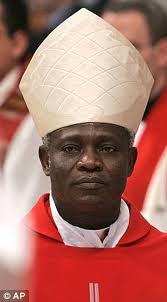
Of course, just when we thought it couldn’t get any more obvious, another—and this time unprecedented—move to consolidate his power (and which also raises the question of a third contender for the throne of St. Peter) was made by Bertone himself. It followed the October 24, 2011, document, “Toward Reforming the International Financial and Monetary Systems in the Context of a Global Public Authority,” which amounted to a call by the Vatican for a World Political and Financial Authority. Published by the Pontifical Council for Justice and Peace, which is headed by Cardinal Peter Turkson, the media was quick—inside and outside Christianity—to see the dark side of socialism raising its head, not to mention prophetic implications of the paper’s call for a Global Authority seated inside the United Nations. In a chapter of our upcoming book Petrus Romanus: The Final Pope Is Here we explain how this new unsettling directive attempts to devise a “moral” mandate for establishing “a global public authority” and “a central world bank” that would oversee individual and world pecuniary institutions through subjugation to a new global power made “at the cost of a gradual, balanced transfer of a part of each nation’s powers to a world authority and to regional authorities” (emphasis added).[vi] The document was addressed at the 2011 G20 Summit in Cannes in comments by President Barack Obama and French President Nicholas Sarkozy, but nothing came of it there due to what Cardinal Bertone did just ten days later. And this is where things start getting interesting, as some soothsayers were already predicting that the author of the document, Peter Turkson of Ghana (Peter the Roman?) could be the next pope, as he is considered papabile by the College of Cardinals.

Following the election of America’s first black president in Obama, analysts around the world began speculating that perhaps Rome would follow suit and roll out the red carpet for a black pope, the first in fifteen hundred years, in somebody like Turkson. Cardinal Francis Arinze, whom Ronald L. Conte Jr. believes will be the next pope and fulfill “The Prophecy of the Popes” by taking the name Pius XIII, is also a black man, an Igbo Nigerian considered papabile since before the 2005 conclave that elected Cardinal Ratzinger (Pope Benedict XVI). “The election of Barack Obama as the first African-American US President could pave the way for the election of [a] black Pope, according to a leading black American Catholic,” wrote the Times Online in 2008. “Wilton Daniel Gregory, 60, the Archbishop of Atlanta, said that in the past Pope Benedict XVI had himself suggested that the election of a black pontiff would ‘send a splendid signal to the world’ about the universal Church.”[vii] The Associated Press agreed. “The pope has appointed Cardinal Peter Turkson of Ghana to head the Vatican’s justice and peace office, a high-profile post that cements his reputation as a possible future papal candidate… Turkson told reporters three weeks ago there was no reason there couldn’t be a black pope, particularly after Barack Obama was elected U.S. president.”[viii] Given that Turkson is popular in some circles, here is how the National Catholic Reporter heralded the release of his document on Reforming the International Financial and Monetary Systems in their October 28, 2011, headline: A Papal Contender Grabs the Spotlight:

Rome saw a striking coincidence this week, which could be either simple luck or a sign of things to come. There were two big-ticket Vatican news flashes, Monday’s note on reform of the international economy and Thursday’s summit of religious leaders in Assisi. In both cases, the same Vatican official was a prime mover: Cardinal Peter Turkson of Ghana, president of the Pontifical Council for Justice and Peace.

Turkson, still young in church terms at 63, was the chief organizer of the Assisi gathering, just as he was the top signatory on the document blasting “neo-liberal” ideologies and calling for a “true world political authority” to regulate the economy. During Vatican press conferences to present both, Turkson was the star attraction each time.

Can anyone say, papabile?[ix]

Only a week following the National Catholic Reporter celebration, however, and only ten days after Turkson released his document calling for a global financial authority, an emergency summit at the Vatican was called by…you guessed it…the Secretariat of State—Cardinal Tarcisio Bertone. And this time he wasn’t taking any prisoners. Bertone blasted the document by Turkson and laid down a new set of laws. From that day forward, he ordered, any new Vatican text would have to be authorized in advance by himself. The popular Chiesa News in Rome said of the power play:

Precisely when the G20 summit in Cannes was coming to its weak and uncertain conclusion, on that same Friday, November 4 at the Vatican, a smaller summit convened in the secretariat of state… In the hot seat was the [Turkson] document on the global financial crisis released ten days earlier by the pontifical council for justice and peace… The secretary of state, Cardinal Tarcisio Bertone, complained that he had not known about it until the last moment. And precisely for this reason he had called that meeting in the secretariat of state. The conclusion of the summit was that this binding order would be transmitted to all of the offices of the curia: from that point on, nothing in writing would be released unless it had been inspected and authorized by the secretariat of state.[x]

While Bertone convinced some Vatican watchers that his overreaching motives had to do with protecting the Holy See from confusion by claiming that he had been in the dark and thus side-swiped by the release of the document (a case Chiesa News thoroughly debunked), others saw in it another giant step in Bertone carefully solidifying his powerbase in Rome. They also imagined that old enemy the Freemasons having something to do with it. “It would seem that the dark forces in the Vatican are making their moves to seize control of the Catholic Church,” wrote Catholic Jew Aron Ben Gilad. “They are using the recent document of the Pontifical Council of Justice and Peace on the global financial crisis as the excuse to seize autocratic control of all the congregations of the curia and putting them under the control of Cardinal Bertone and the Vatican’s Secretariat of State. Whatever the merits or demerits of this document is not the important question, but its use as an instrument for ecclesiastical masonry to take control of the Roman Curia” (emphasis added).[xi] Top Vatican watcher and journalist Andrea Tornielli had stated as much earlier, documenting how Bertone had been consolidating his influence in the Vatican:

…through a number of actions: he appointed bishops who are well known to him and friends in key roles, especially in positions involving the management and control of the Holy See’s finances. The last individual appointed, was the Bishop of Alexandria Giuseppe Versaldinew, to the position of President of the Prefecture for Economic Affairs of the Holy See… On the other hand, Bertone has done away with prelates who had moved against him in some way or another, such as Archbishop Carlo Maria Viganò, who had left the Government office to become Nuncio (ambassador) to the United States, or Bishop Vincenzo di Mauro, who left the Office of Economic Affairs to become Archbishop of Vigevano.[xii]

Given what we have documented in the last few entries, one could think with some certainty that Bertone is thus a shoo-in for the end-times role of Petrus Romanus. However, as we move into 2012, cracks are suddenly appearing in the foundation of his sand castle, and not everybody in the Curia—including Pope Benedict XVI, himself—may wind up as eager to support him as they once were. So who else is rising on the radar as contender for the Final Pope?

In the next entry we consider dark horses on the horizon...


[i] John L. Allen, “A Triptych on Benedict’s Papacy, and Hints of What Lies Beyond,” May 13, 2011, http://ncronline.org/blogs/all-things-catholic/triptych-benedict%E2%80%99s-papacy-and-hints-what-lies-beyond.


[ii] Ibid.


[iii] Ibid.


[iv] Edward Pentin, “Naming of New Cardinals Prompts Speculation about New Pope,” Newsmax, January 10, 2012, http://www.newsmax.com/EdwardPentin/Cardinals-Pope-Benedict-Successor/2012/01/10/id/423629.


[v] Ibid.


[vi] The full text of “Toward Reforming the International Financial and Monetary Systems in the Context of a Global Public Authority” can be read at: Zenit: The World Seen from Rome, October 24, 2011, last accessed January 19, 2012, http://www.zenit.org/article-33718?l=english.


[vii] Richard Owen, “ROME: Black Pope Could Follow Barack Obama’s Election, Says US Archbishop,” Virtue Online, November 6, 2008, http://www.virtueonline.org/portal/modules/news/article.php?storyid=9314.


[viii] The Associated Press, “Ghanaian Cardinal to Head Vatican’s Peace Office,” USA Today, October 24, 2009, http://www.usatoday.com/news/religion/2009-10-24-vatican-africa_N.htm.


[ix] John L. Allen, “A Papal Contender Grabs the Spotlight,” National Catholic Reporter, October 28, 2011, http://ncronline.org/blogs/all-things-catholic/papal-contender-grabs-spotlight.


[x] Sandro Magister, “Too Much Confusion. Bertone Puts the Curia Under Lock and Key,” Cheisa, November 10, 2011, http://chiesa.espresso.repubblica.it/articolo/1350080?eng=y.


[xi] “Cardinal Bertone Seizes Control of the Curia,” November 14, 2011, http://aronbengilad.blogspot.com/2011/11/cardinal-bertone-seizes-control-of.html.


[xii] Andrea Tornielli, “Cardinal Bertone Turns 77,” Vatican Insider, December 12, 2011, http://vaticaninsider.lastampa.it/en/homepage/the-vatican/detail/articolo/bertone-

cardinale-vaticano-vatican-cardinal-cardenal-10436/.


Monday, February 27, 2012

PETRUS ROMANUS - The False Prophet And The Antichrist Are Here (blog post 2)

Dear Cardinal Bertone: Who Between You and Me is Deliberately Lying?

In his uncharacteristically explosive response to Cardinal Bertone—Dear Cardinal Bertone: Who Between You and Me is Deliberately Lying?—we first discover how, after significant time and investigation, Antonio Socci concluded the Vatican had withheld an important part of the Fatima revelation during its celebrated press conference and release of “The Message of Fatima,” June 26, 2000.

Socci describes in the introduction to his book how at first he truly believed the Vatican’s official version of the Fatima Message, prepared at that time by Cardinal Ratzinger (current Pope Benedict XVI) and Monsignor Tarcisio Bertone (possible next and final pope), which with its release to the public claimed to be the final Secret. Then Socci came across an article by Italian journalist Vittorio Messori, entitled “The Fatima Secret, the Cell of Sister Lucy Has Been Sealed,” and a series of questions cast suspicions on the Vatican’s authorized publication for which Socci had no answers. Why would Messori, whom Socci describes as “a great journalist, extremely precise…the most translated Catholic columnist in the world,”[i] want to challenge the Church’s official version of the Third Secret without good cause, he reasoned. Not long after, Socci came across a second similar thesis published in Italy by a young and careful writer named Solideo Paolini, which convinced Socci to begin a probe of his own focusing on the biggest question of them all—was a portion of Lucy’s hand-written document, which contained the principal words “of the Blessed Virgin Mother” concerning end-times conditions at Rome, being withheld from public view by the Vatican due to its potentially explosive content?

Socci’s suspicions only deepened after he requested an interview (well ahead of his work, The Fourth Secret of Fatima which later cast doubts on Rome’s official story) with Cardinal Bertone, who, together with Joseph Ratzinger, had coauthored the June 26, 2000 Vatican document that purportedly released the final segment of the “The Message of Fatima.”[ii]

“I’ve searched many influential authorities inside the Curia, like Cardinal Bertone, today Secretary of State in the Vatican, who was central to the publication of the Secret in 2000,” Socci says. “The Cardinal, who actually favored me with his personal consideration, having asked me to conduct conferences in his former diocese of Genoa, [now] didn’t deem it necessary to [even] answer my request for an interview. He was within his rights to make this choice, of course, but this only increased the fear of the existence of embarrassing questions, and most of all, that there is something (extremely important) which needs to be kept hidden.”[iii]

Though not expecting to uncover such a colossal enigma, in the end Socci was left convinced that two sets of the Fatima Secret actually exist: one which the public has seen, and another, which for reasons yet unknown, the Vatican is keeping buried.

At the beginning of this possible plot was a description of the Third Secret given by Cardinal Angelo Sodano a full five weeks before the June 26, 2000 “Message of Fatima” was delivered by Rome. Sodano’s comments came during Pope John Paul II’s beautification of Jacinta and Francisco at Fatima, when he surprised many in a speech, saying the vision of a “bishop clothed in white” who makes his way with great effort past the corpses of bishops, priests, and many lay persons, is only “apparently dead” when he falls to the ground under a burst of gunfire.[iv]

Using the added language “apparently dead,” Cardinal Sodano went on to suggest the Fatima vision had been fulfilled in the 1981 assassination attempt against John Paul II. “It appeared evident to His Holiness that it was ‘a motherly hand which guided the bullet’s path,’ enabling the ‘dying Pope’ to halt ‘at the threshold of death.’”[v]

Though some applauded Sodano’s presentation that day, others saw in it, and him, a concerted cover-up, as the Fatima prophecy and the alleged fulfillment in 1981 bore significant differences. The Washington Post was happy to point out these glaring contradictions on July 1, 2000 when under the stinging headline, “Third Secret Spurs More Questions: Fatima Interpretation Departs from Vision” the newspaper opined:

On May 13, Cardinal Angelo Sodano, a top Vatican official, announced the imminent release of the carefully guarded text. He said the Third Secret of Fatima foretold not the end of the world, as some had speculated, but the May 13, 1981, shooting of Pope John Paul II in St. Peter’s Square.

Sodano said the manuscript…tells of a “bishop clothed in white” who, while making his way amid corpses of martyrs, “falls to the ground, apparently dead, under a burst of gunfire.”

But the text released Monday (June 26) leaves no doubt about the bishop’s fate, saying that he “was killed by a group of soldiers who fired bullets and arrows at him.” Everyone with the pontiff also dies: bishops, priests, monks, nuns and lay people. John Paul survived his shooting at the hands of a single gunman, Mehmet Ali Agca, and no one in the crowd was harmed in the attack. [vi]

Other facts the Washington Post did not point out is how according to the prophecy the pope is killed in “a big city half in ruins” while walking to the top of a mountain and kneeling at the foot of a cross. John Paul was riding in the pope’s car through St. Peter’s square, not walking, there was no big mountain or kneeling at a cross, and the city was not half-destroyed. And then there is the contradictory testimony by Cardinal Ratzinger (current Pope Benedict XVI) himself from 1984, which he gave in an interview with the Pauline Sisters’ newsletter (Jesus Magazine) and which was re-published a year later in The Ratzinger Report, titled “Here is Why the Faith is in Crisis.” In this discussion, Ratzinger, who had read the actual Fatima Secret, said the vision involved “dangers threatening the faith and the life of the Christian and therefore [the life] of the world” as well as marking the beginning of the end times.[vii] Additionally, he said, “the things contained in [the] Third Secret correspond to what has been announced in Scripture and has been said again and again in many other Marian apparitions” and that, “If it is not made public, at least for the time being, it is in order to prevent religious prophecy from being mistaken for a quest for the sensational.”[viii]

Concerned Catholics have since contrasted this 1984 testimony with the more recent report by Ratzinger, and have wondered when, where, and under what circumstance his account changed. The 1981 assassination attempt against John Paul II certainly did not fulfill the published parts of the Fatima vision nor correspond to the “last times” as depicted in the Bible. And then there is the affirmation by the Vatican’s most respected scholars who had deduced from years of studying the Fatima prophecy that it concerned an end-time global crisis of faith emanating from the highest echelons at Rome. Celebrated Cardinal Mario Luigi Ciappi (1909–1996) served as the personal theologian to five popes including John Paul II and unreservedly held that in “the Third Secret it is foretold, among other things, that the great apostasy in the Church begins at the top” (emphasis added).[ix] Cardinal Silvio Oddi added in a March, 1990 interview with Il Sabato magazine in Rome, Italy: “…the Third Secret alluded to dark times for the Church: grave confusions and troubling apostasies within Catholicism itself… If we consider the grave crisis we have lived through since the [Vatican II] Council, the signs that this prophecy has been fulfilled do not seem to be lacking.”[x] Even more impressive in his testimony was the late Father Joaquin Alonso who knew Sister Lucy personally, had conversations with her, was for sixteen years the archivist at Fatima, and who before his death in 1981, stated the following concerning the Third Secret:

…the text makes concrete references to the crisis of faith within the Church and to the negligence of the pastors themselves [and the] internal struggles in the very bosom of the Church and of grave pastoral negligence by the upper hierarchy… terrible things are to happen. These form the content of the third part of the Secret… [and] like the secret of La Salette, for example, there are more concrete references to the internal struggles of Catholics or to the fall of priests and religious. Perhaps it even refers to the failures of the upper hierarchy of the Church. For that matter, none of this is foreign to other communications Sister Lucy has had on this subject.[xi]

Perhaps most unvarying among those who actually had access to and read the Fatima message was Jesuit Malachi Martin, a close personal friend of Pope Paul VI who worked within the Holy See doing research on the Dead Sea Scrolls, publishing articles in journals on Semitic paleography, and teaching Aramaic, Hebrew, and Sacred Scripture. As a member of the Vatican Advisory Council and personal secretary to renowned Jesuit Cardinal Augustin Bea, Martin had privileged information pertaining to secretive church and world issues, including the Third Secret of Fatima, which Martin hinted spelled out parts of the plan to formerly install the dreaded False Prophet (Petrus Romanus) during a “Final Conclave.” Comparing the conflicting statements between Cardinal Ratzinger and Malachi Martin, Father Charles Fiore, a good friend of the murdered priest Alfred J. Kunz (detailed in the upcoming book Petrus Romanus: The Final Pope Is Here) and the late eminent theologian Fr. John Hardon, said in a taped interview: “We have two different Cardinal Ratzingers; we have two different messages. But Malachi Martin was consistent all the way through.”[xii]

Wikipedia’s entry on the Three Secrets of Fátima adds:

On a syndicated radio broadcast, Father Malachi Martin was asked the following question by a caller: “I had a Jesuit priest tell me more of the Third Secret of Fatima years ago, in Perth. He said, among other things, the last pope would be under control of Satan… Any comment on that?” Fr. Martin responded, “Yes, it sounds as if they were reading, or being told, the text of the Third Secret.” In a taped interview with Bernard Janzen, Fr. Martin was asked the following question: “Who are the people who are working so hard to suppress Fatima?” Fr. Martin responded, “A bunch, a whole bunch, of Catholic prelates in Rome, who belong to Satan. They’re servants of Satan. And the servants of Satan outside the Church, in various organizations; they want to destroy the Catholicism of the Church, and keep it as a stabilizing factor in human affairs. It’s an alliance. A dirty alliance, a filthy alliance...” In the same interview, Fr. Martin also said with respect to Lucia [Lucy of Fatima] that, “They’ve (The Vatican) published forged letters in her name; they’ve made her say things she didn’t want to say. They put statements on her lips she never made.”[xiii]

Indeed, something incredible was going on with Sister Lucy, and we start down that road in the next entry.